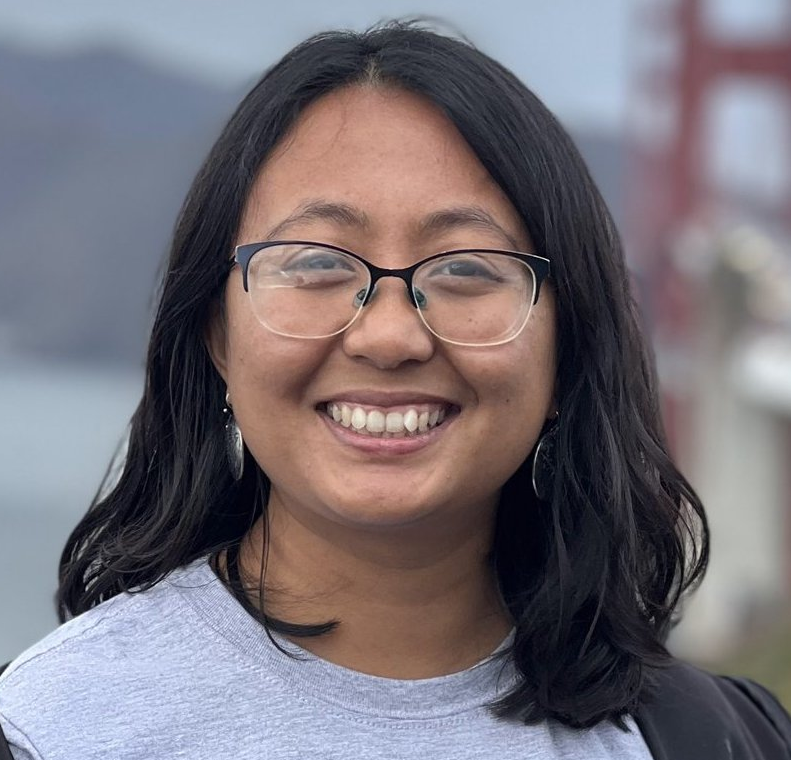
Hi, I am Pallavi!
This is my professional website. But there is not a single piece of professional story that describes me.
I have been a poet, writing my feelings away in scraps of paper.
I have also been a biotechnology student, trying to find a sustainable way to produce plastic using bacterial strains found in wastelands.
I have also worked as a humanitarian in community-driven projects and public health.
Then I went to the Netherlands for a master’s in functional genomics, where I learned to read organisms through their data instead of their symptoms.
And recently I have completed my PhD, where I worked on making sense of an organism that also had no map, just like me.
The Organism
Did I ever think I’d spend five years researching an organism I can’t see with the naked eye? No. Did I enjoy it? Yes.
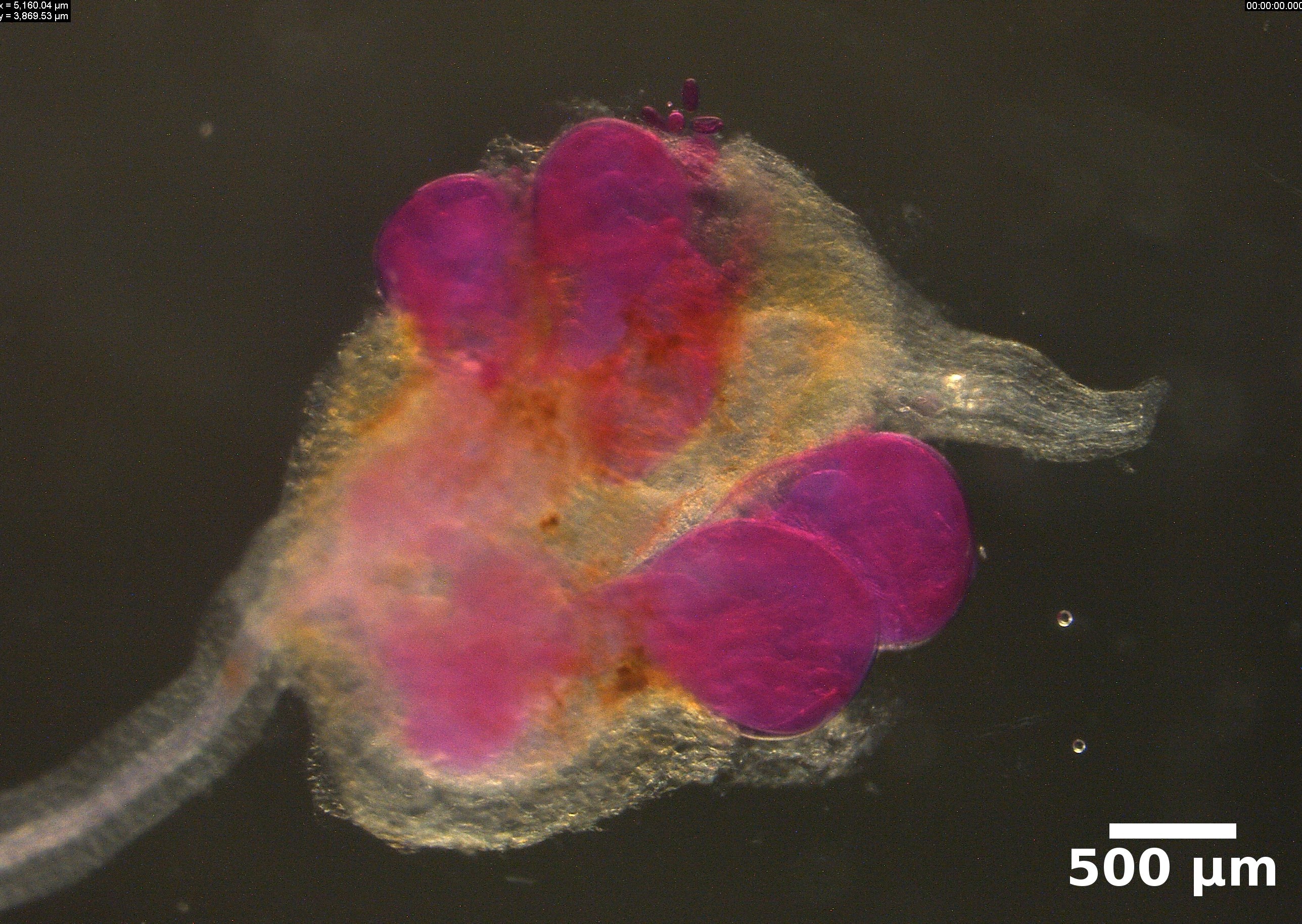
M. hapla females in bean roots stained with acid fuchsin dye.
What really drew me to this organism, a nematode called Meloidogyne hapla was its potential. Using the long-read technologies we have now, we could assemble a chromosome-scale genome of this animal. Using the way it reproduces, we could even build a genetic map, something not yet possible in other Meloidogyne species.
Why did that matter? Meloidogyne species are the most damaging plant-parasitic nematodes in the world, causing billions of dollars in crop losses. A genome and genetic map for this one organism can serve as a roadmap for studying other root-knot nematodes, and for building functional genetics tools like CRISPR, which still don’t exist for this organism today.
This map is helping us understand how these nematodes break plant resistance. Using the genome, I traced that ability to a region on a single chromosome, and then to a candidate gene.
Telling the Story
Building a genome is only half of it. The other half is making someone else care about a worm they will never see.
I have given talks at nematology conferences in the United States and Europe, but the audience I think about most is the one from Biodiversity Museum Day, where I stood in front of K–12 students, growers, and curious strangers and tried to explain why a microscopic animal in the soil should matter to them. Translating between the data and the person in front of you is its own skill, and I have spent as much time learning it as I have learning to assemble a genome.
In the News
Beyond Academia
Outside the lab, I have worked on community-driven projects focused on sustainable agriculture and public health in Nepal.
As part of a WASH (Water, Sanitation and Hygiene) and sustainable livelihoods initiative, I worked with local communities to improve their access to clean water, and led workshops with women’s cooperatives on menstrual hygiene, women’s health, and domestic violence. We established a women’s community center that kept running under local leadership long after we left, which is the part I am proudest of.
I also led a team of fourteen volunteers from the UK and Nepal, supporting smallholder farmers as they built small, sustainable businesses through high-value vegetable production, including polytunnels that let them grow through the off-season.
Whether it's a genome, a poem, or a village water system, I am drawn to things that don't yet have a map, and to the work of making one.
